
ICFP 2025: Equity Through Action — Fueling Our Resilience Through Partnership and Purpose

Some of us arrive carrying urgency, others hope, others resolve —
and many of us, all three at once.”
-Nabeeha Kazi Hutchins, PAI President & CEO
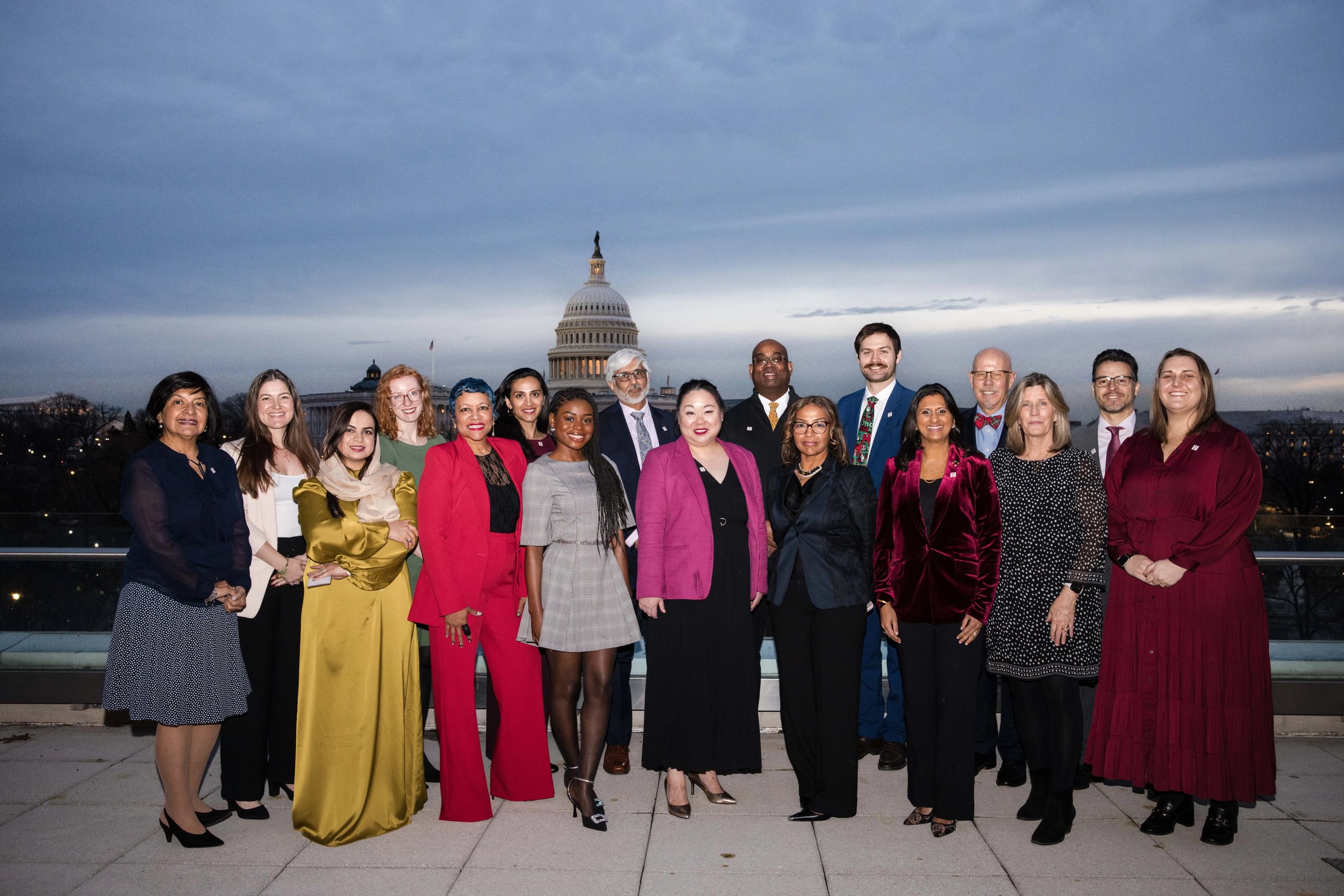
That sentiment set the tone on December 17, 2025, as PAI gathered partners, advocates, policymakers, and friends in Washington, D.C. to mark 60 years of advancing sexual and reproductive health and rights. The evening was both a celebration and a deliberate pause—an opportunity to reflect on what it takes to endure, adapt, and push forward at a moment when reproductive autonomy and global commitments to women’s health are increasingly contested.
As conversation filled the room, PAI President and CEO Nabeeha Kazi Hutchins welcomed the community with an acknowledgment of the weight—and the choice—of being present. She thanked diplomatic leaders, congressional partners, donors, and advocates for stepping into shared space at a time that demands clarity and courage, reminding guests that progress has never been accidental. It has always been built by people willing to show up together, even when the path ahead is uncertain.
Sixty Years of Enduring Partnerships
In her opening remarks, Nabeeha returned to PAI’s origins on December 29, 1965, when a bipartisan group of diplomats, policymakers, public health experts, advocates, environmentalists, and philanthropists united around a conviction that access to family planning and reproductive health is essential to human progress.
“At the time,” she noted, “that belief was far from consensus. Advancing it required evidence, persistence, and a willingness to speak plainly to power before the world was ready to listen.”
From its earliest years, PAI helped shape the global SRHR ecosystem—supporting U.S. population assistance, backing the creation of UNFPA, and pressing institutions to treat reproductive health as a core development priority. Much of this work happened quietly, focused on leverage and lasting impact rather than visibility.
For six decades, PAI has remained rooted in Washington, D.C.—“not to center ourselves,” Nabeeha emphasized, “but to help align U.S. policy and funding with the rights and realities of communities around the world.” Across political cycles, PAI has built consensus when possible, pushed back when necessary, and supported civil society through shifting global and domestic landscapes.
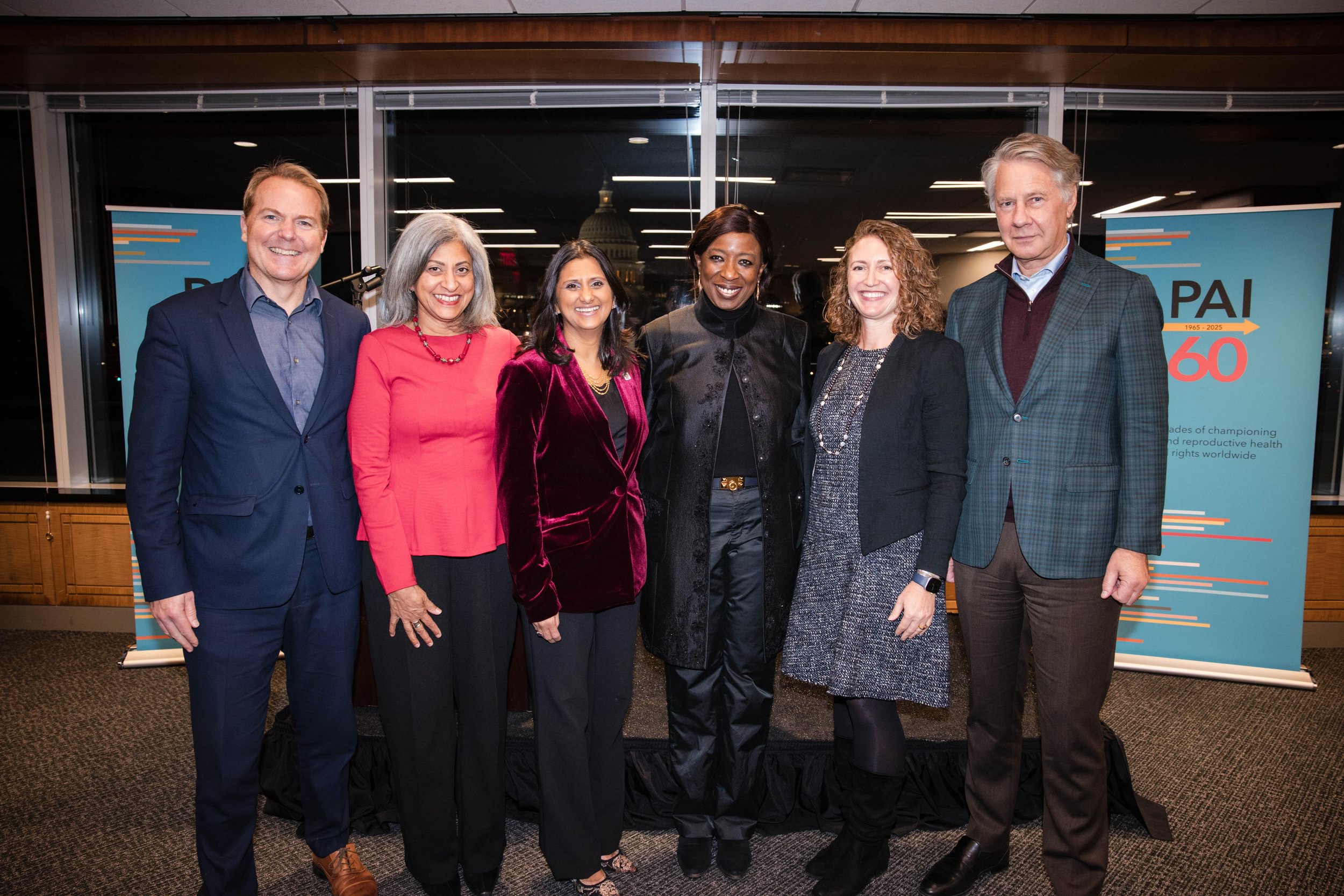
Even without offices abroad, PAI’s work has always been global, grounded in long-term partnerships with advocates in more than 30 countries. New awards, including from the Gates Foundation and the William and Flora Hewlett Foundation, will enable PAI to deepen this work—strengthening civil society leadership and advancing evidence-based advocacy at a moment when resilience and collective action matter more than ever.
Honoring Global and U.S. Leadership
Nabeeha also highlighted a major legislative milestone: for the first time, the Support UNFPA Funding Act was introduced in the U.S. Senate by Senator Jeanne Shaheen, with fifteen original co-sponsors. The bill, already introduced in the House, affirms the life-saving and irreplaceable role of UNFPA in delivering reproductive health care worldwide.
The evening then honored an institution that has been part of PAI’s story from the beginning. Nabeeha presented the 2025 PAI Catalyst Award to UNFPA, accepted by Executive Director and UN Under-Secretary-General Diene Keita. In her keynote remarks, Ms. Keita reflected on UNFPA’s partnership with PAI and the importance of principled, collaborative leadership.
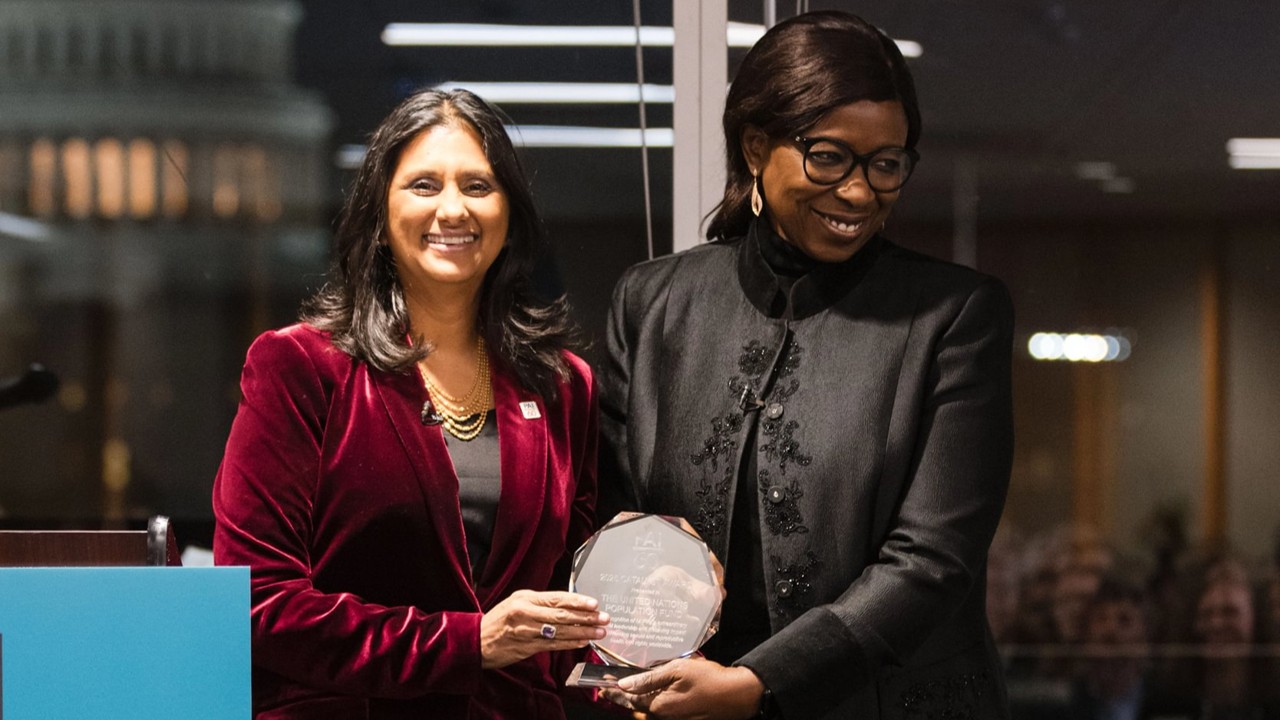
“Six decades is a monumental achievement, a diamond anniversary that speaks to unwavering dedication and transformative impact,” she shared. “PAI has been a steadfast partner of UNFPA for decades, making the case to policymakers that investing in the health and rights of women and young people is not just the right thing to do – it is one of the very best investments any government can make in its own future.”
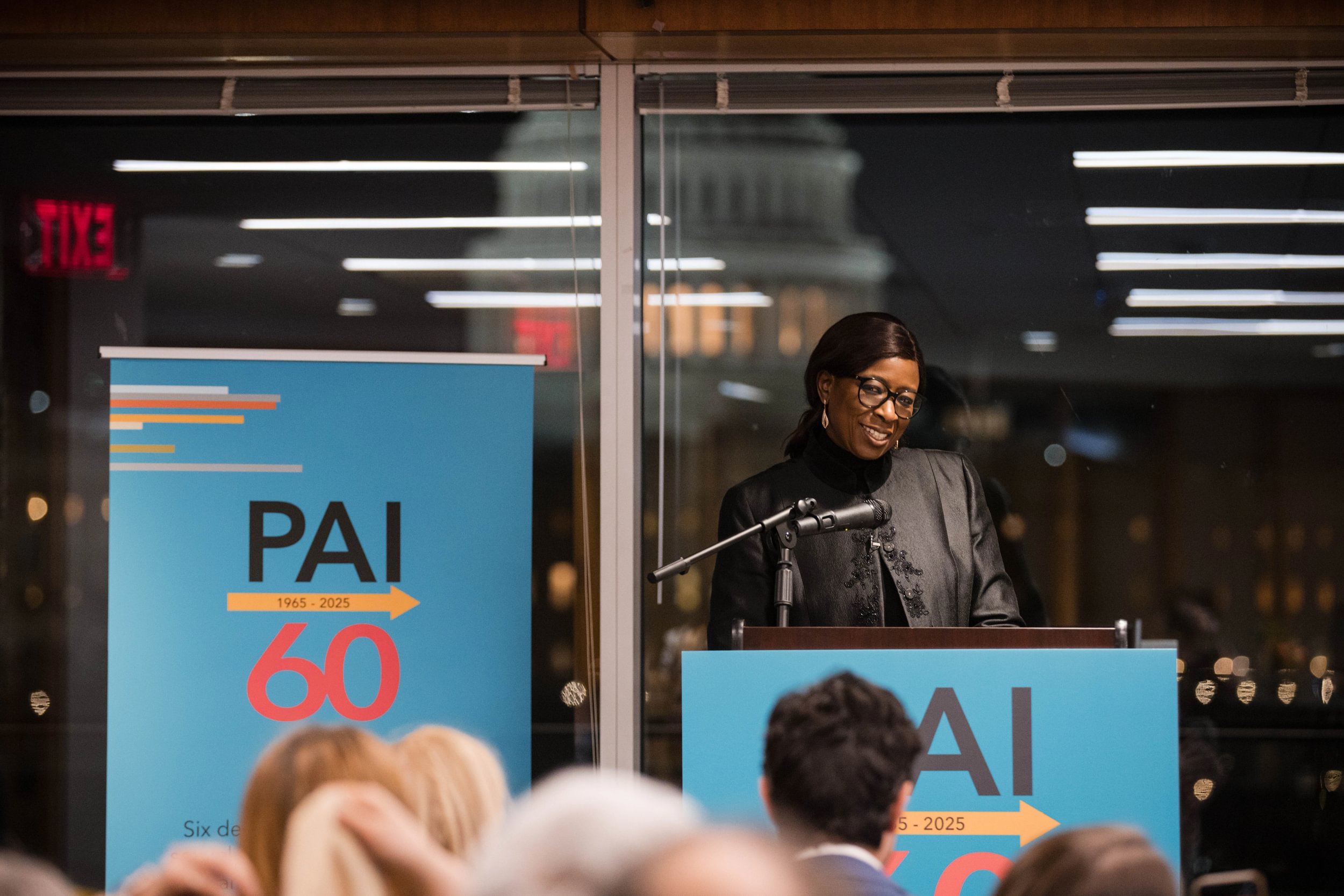
Ms. Keita emphasized staying focused on shared goals for women and young people, even as political contexts shift. From comprehensive sexuality education to maternal health and contraception, she underscored that delivering equitable, high-quality services must remain paramount. Her remarks reinforced a commitment to adapt approaches without compromising rights or quality, and highlighted the need for collaborative leadership amid heightened global challenge.
Honoring a Champion for Choice
Following Ms. Keita’s remarks, Nabeeha returned to the stage to recognize a different kind of leadership. She presented PAI’s inaugural Champion for Choice Award to Craig Lasher, PAI Senior Fellow for U.S. Government Affairs, honoring 44 years of service to PAI and the global family planning community.
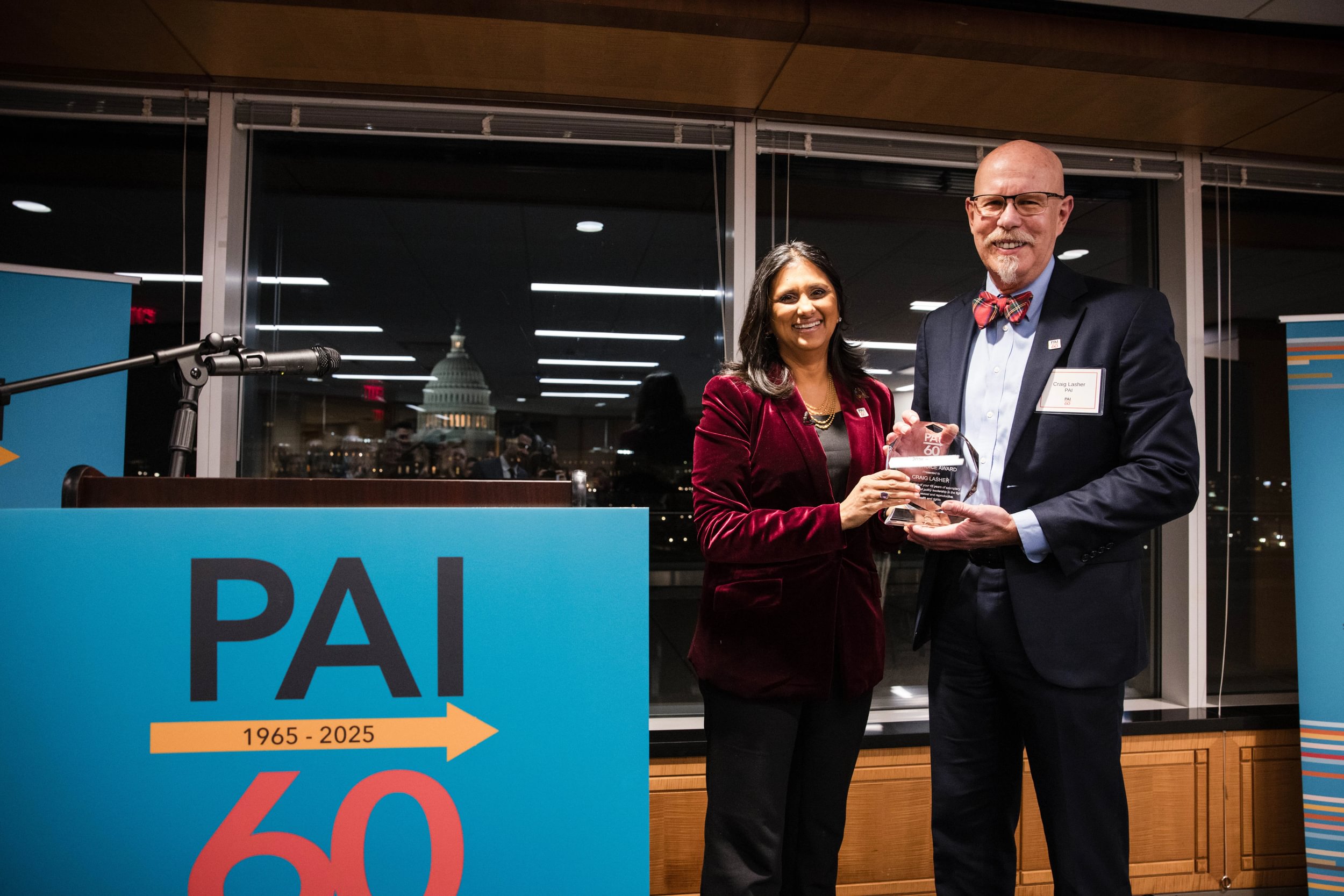
Over more than four decades, Craig has been one of the most trusted and respected voices in U.S. and international family planning policy. Often serving as the institutional memory of the field, his work has helped protect critical funding, clarify complex policy debates, and guide partners through shifting political landscapes with rigor and discretion.
“Craig is often called the dean of the family planning community—and for good reason,” Nabeeha said. “Across administrations and decades, when moments of uncertainty arise, the answer has often been simple: ‘Call Craig—he’ll know.’”
The award honored not only Craig’s extraordinary tenure, but his unwavering commitment to evidence, integrity, and a movement he has helped sustain across generations.
Looking Forward: Freedom Starts With Her
In closing, Nabeeha thanked the community for walking alongside PAI for six decades and urged guests to meet the moment ahead with resolve. “Holding the line matters—but it is never enough,” she said. “Progress requires pushing forward, especially when the work gets harder.”
The evening concluded with a screening of Freedom Starts With Her, PAI’s U.S.-focused public engagement campaign linking domestic and global struggles for reproductive and reminds us that reproductive freedom anywhere depends on reproductive freedom everywhere.
As PAI looks ahead, the message of the evening was clear: this community is ready.
It is ready to lead with purpose, to stand firm in the face of challenge, and to push progress forward—guided by evidence, anchored in partnership, and grounded in the conviction that reproductive freedom is fundamental to justice, equity, and dignity. Because true freedom does not begin with policy alone, but with people having the power to shape their own futures.
Together, that is the future PAI and its partners are building—now and for the next 60 years.
Stay informed about the issues impacting sexual and reproductive health and rights.

